History of Mughlai Cuisine: Origin, Food & Legacy
Imagine walking into a royal kitchen centuries ago. Large copper pots simmer slowly over fire. The fragrance of saffron, cardamom and roasted spices fills the room. Meat cooks gently until tender, rice is perfumed with aromatic ingredients, and cooks carefully prepare dishes intended for an emperor’s table.History of Mughlai Cuisine
This is the world that shaped what we now recognise as Mughlai cuisine.
Rich curries, fragrant biryanis, succulent kebabs and creamy kormas are today found in restaurants and homes across the Indian subcontinent. Yet behind these familiar dishes lies a fascinating story of migration, royal patronage, cultural exchange and culinary adaptation.
The history of Mughlai cuisine is closely connected with the Mughal Empire, but its roots extend beyond India. Persian and Central Asian culinary traditions arrived in the subcontinent and encountered India’s spices, ingredients and established cooking practices.
The result was not simply imported royal food. It was the creation of a distinctive culinary tradition that continued evolving long after the Mughal Empire itself disappeared.
From the imperial courts to modern restaurant menus, let us explore the origin, food and legacy of Mughlai cuisine.
What Is Mughlai Cuisine?
Mughlai cuisine refers broadly to a style of cooking associated with the Mughal courts and the culinary traditions that developed under their influence in the Indian subcontinent.
It is commonly known for aromatic spices, meat-based preparations, rice dishes, slow cooking, nuts, dried fruits and rich gravies. Ingredients such as saffron, cardamom, cinnamon, cloves, almonds, cashews and dairy frequently appear in dishes associated with Mughlai cooking.
But defining Mughlai cuisine simply as “rich Indian food” misses much of its story.
Mughlai food developed through interaction between different culinary worlds. Central Asian and Persian traditions encountered Indian ingredients and regional cooking practices. Over generations, cooks adapted recipes to local tastes and resources.
That continuous exchange is central to understanding the history of Mughlai cuisine in India.
Origin of Mughlai Cuisine
The origin of Mughlai cuisine is linked to the establishment and expansion of the Mughal Empire in the Indian subcontinent during the sixteenth century.
Babur founded the Mughal Empire in India after the Battle of Panipat in 1526. His Central Asian background brought cultural traditions that differed from those already established in India.
However, Mughlai cuisine did not appear overnight.
As Mughal rule developed, imperial kitchens became increasingly elaborate. Persian cultural influence was particularly important at court, while Indian cooks, ingredients and regional food traditions also contributed to the cuisine.
Over time, these influences merged.
Persian and Central Asian Influence on Mughlai Food
Persian and Central Asian food traditions contributed significantly to Mughal court culture.
Rice preparations, grilled meats, dried fruits, nuts and aromatic seasonings already played important roles in these culinary traditions. The use of ingredients such as saffron and dried fruits also became associated with luxurious courtly dining.
When these techniques encountered Indian spices, vegetables and cooking traditions, they changed.
Indian cooks had centuries of experience working with spices and complex flavour combinations. Local ingredients offered possibilities that imported traditions did not necessarily have in their original forms.
This interaction gradually produced the cuisine that later generations came to associate with Mughlai food.
Mughlai Cuisine and the Royal Kitchens
To understand the history of Mughlai cuisine, it is important to understand the significance of the royal kitchen.
Food at court was more than nourishment. It represented status, hospitality, abundance and refinement.
Imperial kitchens could involve large numbers of cooks and specialists responsible for different preparations. Elaborate meals allowed rulers to display wealth and entertain nobles, ambassadors and important guests.
The availability of expensive ingredients encouraged experimentation.
Saffron could provide colour and fragrance. Nuts could thicken gravies and add richness. Meat could be cooked slowly until exceptionally tender. Rice dishes could be perfumed with whole spices and aromatic ingredients.
Royal patronage gave skilled cooks the resources and environment to develop sophisticated preparations.
Mughlai Food During Akbar’s Reign
The reign of Emperor Akbar represents an important period in the development of Mughal court culture.
Akbar’s empire expanded across culturally diverse regions. His court consequently became a meeting point for people, traditions and ingredients from different parts of the subcontinent.
The Ain-i-Akbari, written by Abu’l-Fazl, provides valuable descriptions of the imperial administration and aspects of court life, including food.
The culinary world surrounding the Mughal court was therefore much broader than the stereotypical image of endless meat-heavy feasts.
Different grains, vegetables, dairy products, rice preparations, sweets and other foods formed part of the wider food culture of the period.
How Mughlai Cuisine Evolved in India
One of the most fascinating aspects of Mughlai food history is its ability to change.
As Mughal political influence expanded, courtly culinary traditions travelled with administrators, nobles, soldiers and cooks. Regional centres then developed their own interpretations.
Local ingredients became part of recipes. Cooking methods changed. Spice levels adjusted according to regional preferences.
This is why Mughlai-influenced food does not taste exactly the same everywhere in India.
Delhi developed its own culinary identity. Awadh became famous for highly refined cooking techniques. Hyderabad developed distinctive rice and meat dishes under later royal traditions.
Instead of creating one rigid cuisine, Mughal influence contributed to several interconnected culinary traditions.
Famous Mughlai Dishes and Their Stories
The legacy of Mughlai cuisine is perhaps easiest to understand through its food.
Many dishes now considered classics developed through complex histories and regional adaptations. Not every dish commonly placed on a modern “Mughlai” menu originated directly inside a Mughal imperial kitchen, but each reflects the wider culinary world influenced by courtly Indo-Persian traditions.
1. Biryani
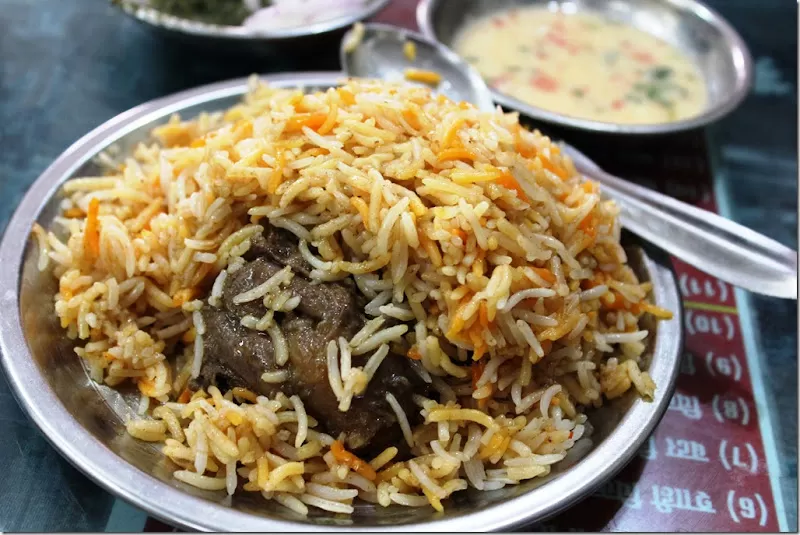
Biryani is among the most celebrated dishes associated with Mughlai and Indo-Persian food traditions.
Its precise origin remains debated. Persian-style rice preparations and Central Asian traditions likely influenced its development, while cooks in the Indian subcontinent transformed the dish substantially.
Rice, meat, spices and aromatic ingredients could be layered and slowly cooked, producing a dish in which individual grains remained distinct while absorbing fragrance from the ingredients around them.
Eventually, different regions developed their own biryani traditions, including Hyderabadi, Lucknowi, Kolkata and Malabar variations.
Today, biryani is much bigger than its royal associations. It has become one of South Asia’s most recognisable foods.
2. Korma
Korma is another dish strongly associated with Mughlai cuisine.
Traditionally, korma involves gently cooking meat or vegetables in a rich, aromatic preparation. Depending on the recipe and region, yoghurt, nuts, cream or other ingredients may contribute body and richness.
Unlike curries designed primarily around intense chilli heat, a good korma often focuses on aroma, texture and carefully balanced spices.
Its richness made it particularly suited to courtly dining.
3. Kebabs
Kebabs have deep roots across Central Asia, Persia, the Middle East and South Asia.
Under different Indian court cultures, kebab-making became increasingly sophisticated. Minced meat could be mixed with spices and shaped around skewers, while whole pieces of marinated meat could be grilled or roasted.
Over time, numerous varieties emerged, including seekh kebab, shami kebab and other regional preparations.
The story of kebabs also demonstrates why Mughlai cuisine should be understood as part of a larger network of culinary exchange rather than as an isolated tradition.
4. Nihari
Nihari is a slow-cooked meat preparation with a rich gravy and deep flavour.
It became particularly associated with the culinary traditions of Delhi and later developed enormous popularity elsewhere in South Asia.
Traditionally cooked over a long period, nihari demonstrates one of the defining strengths of this culinary world: patience.
Instead of relying entirely on aggressive seasoning, slow cooking allows meat, fat and spices to develop depth over time.
5. Mughlai Breads
Rice receives much of the attention when discussing traditional Mughlai food, but breads are equally important.
Naan, sheermal and other flatbreads became natural companions to rich gravies and meat preparations.
Sheermal, in particular, is known as a lightly sweet, enriched bread associated with Persian-influenced culinary traditions and later with places such as Lucknow.
Bread provided the perfect contrast to luxurious curries and slow-cooked dishes.
Spices and Ingredients Used in Mughlai Cuisine
Mughlai cooking is aromatic rather than simply “spicy.”
That distinction matters.
Common ingredients associated with different Mughlai preparations include cardamom, cinnamon, cloves, cumin, coriander, saffron, black pepper, nutmeg and mace.
Fresh ingredients such as ginger, garlic, onions, mint and coriander also contribute flavour.
Nuts, Dairy and Dried Fruits
Another recognisable feature of many Mughlai dishes is richness created through ingredients such as almonds, cashews, yoghurt, milk, cream and dried fruits.
Ground nuts can give gravies body and a smooth texture. Yoghurt can provide acidity while tenderising meat. Saffron adds both fragrance and colour.
However, not every traditional Mughlai dish is creamy or extremely heavy.
The idea that Mughlai cuisine always means a thick cream-filled gravy is partly a result of modern restaurant interpretations.
Traditional Mughlai Cooking Techniques
Ingredients alone do not explain the distinctive character of Mughlai cuisine. Technique is equally important.
Dum Cooking
Dum is a slow-cooking method in which food is cooked in a sealed vessel.
The lid may traditionally be sealed with dough, trapping steam and aroma inside the pot.
This allows ingredients to cook gently while flavours circulate within the vessel.
Dum cooking became particularly famous through Awadhi culinary traditions and remains strongly associated with biryani and other elaborate rice preparations.
Grilling and Roasting
Fire-based cooking also plays an important role in kebabs and meat dishes.
Meat may be marinated with spices and other ingredients before being cooked over intense heat. This creates a smoky exterior while keeping the inside tender.
Slow Cooking
Many meat preparations benefit from low, patient cooking.
Slow cooking allows tougher cuts to soften while giving spices and aromatics time to blend into the gravy.
This patience is one reason traditional Mughlai preparations can develop such remarkable depth.
Mughlai Cuisine and Awadhi Cuisine: Are They the Same?
Mughlai and Awadhi cuisine are closely connected, but they are not identical.
Mughlai cuisine is broadly associated with the culinary traditions influenced by Mughal courts.
Awadhi cuisine developed particularly around Lucknow and the court of Awadh. It absorbed wider Indo-Persian influences while developing its own remarkable refinement.
Awadhi cooks became especially famous for delicate seasoning, kebabs, kormas, rice dishes and dum pukht cooking.
The distinction matters because Indian royal cuisine continued developing beyond the central Mughal court.
Awadhi food should therefore be appreciated as a major culinary tradition in its own right.
From Royal Kitchens to Indian Restaurants
The decline of Mughal political power did not mean the disappearance of Mughlai cuisine.
Cooks, families and culinary traditions moved beyond royal courts. Recipes were preserved, adapted and passed through generations.
Eventually, foods once associated with elite dining became accessible to much wider audiences.
Restaurants and street-food cultures played an important role in this transformation.
Today, the term “Mughlai” may appear on menus ranging from historic establishments to neighbourhood restaurants.
Some serve dishes closely connected with older cooking traditions. Others offer modern interpretations designed for contemporary tastes.
This evolution is part of the cuisine’s living history.
The Legacy of Mughlai Cuisine in India
The greatest legacy of Mughlai cuisine may be how deeply it has become woven into the food culture of the Indian subcontinent.
Biryani is eaten at weddings, festivals, restaurants and family gatherings. Kebabs have become beloved street and restaurant foods. Kormas remain staples of celebratory dining. Aromatic rice dishes and slow-cooked meat preparations continue to bring people together.
More importantly, Mughlai cuisine demonstrates how food evolves through cultural exchange.
It cannot be understood simply as foreign food brought to India, nor can every dish served under the Mughlai label be traced directly to an emperor’s table.
The cuisine developed because Persian, Central Asian and Indian traditions interacted over generations.
That interaction created something distinctive.
Mughlai Cuisine in the Modern World
Today, Mughlai cuisine has travelled far beyond the places where it first developed.
Restaurants serving Mughlai-inspired food can be found across India and in international cities with significant South Asian communities.
Modern chefs also reinterpret traditional dishes.
Some reduce the richness. Others experiment with presentation while preserving traditional spice combinations. Vegetarian versions of historically meat-focused preparations have become common.
Yet the core appeal remains remarkably similar.
Aromatic spices, patient cooking, contrasting textures and generous hospitality continue to define the experience.
The royal kitchen has changed, but the food continues to travel.
FAQs About the History of Mughlai Cuisine
1. What is the history of Mughlai cuisine?
The history of Mughlai cuisine is associated with the Mughal period in the Indian subcontinent. It developed through the interaction of Persian and Central Asian culinary traditions with Indian ingredients, spices and regional cooking practices.
2. Where did Mughlai cuisine originate?
Mughlai cuisine developed primarily in the Indian subcontinent under Mughal rule, although many of its culinary foundations were influenced by Persian and Central Asian food traditions.
3. Who introduced Mughlai cuisine to India?
There was no single person responsible for creating Mughlai cuisine. The arrival and establishment of the Mughals introduced and strengthened Central Asian and Persian culinary influences, which subsequently blended with Indian food traditions.
4. What are the most famous Mughlai dishes?
Popular dishes associated with Mughlai cuisine include biryani, korma, kebabs, nihari and various rich meat preparations, breads and rice dishes.
5. What makes Mughlai food special?
Mughlai food is particularly known for aromatic spices, slow-cooking techniques, meat preparations, rice dishes and the selective use of ingredients such as saffron, yoghurt, nuts and dried fruits.
6. Is biryani a Mughlai dish?
Biryani has a complex history influenced by Persian, Central Asian and Indian culinary traditions. It became strongly associated with Muslim royal and regional cuisines across the Indian subcontinent, including Mughlai-influenced traditions.
7. Is Mughlai cuisine the same as Awadhi cuisine?
No. They are closely related but distinct. Mughlai cuisine refers broadly to food influenced by Mughal court traditions, while Awadhi cuisine developed around the royal culture of Awadh, particularly Lucknow.
8. Is Mughlai food always spicy?
No. Traditional Mughlai food often emphasises fragrance, richness and balance rather than extreme chilli heat. Cardamom, saffron, cinnamon, cloves and other aromatic spices can be as important as chilli.
9. Why is Mughlai food considered royal cuisine?
Mughlai cuisine is associated with imperial and aristocratic kitchens where skilled cooks prepared elaborate dishes using high-quality ingredients and sophisticated cooking techniques.
10. What is the legacy of Mughlai cuisine?
The legacy of Mughlai cuisine can be seen in India’s biryanis, kebabs, kormas, breads and slow-cooking traditions. Its influence continues across restaurants, home kitchens and regional cuisines throughout South Asia.
Conclusion
The history of Mughlai cuisine is ultimately a story of movement, exchange and transformation.
Its foundations connect the culinary traditions of Central Asia and Persia with the extraordinary diversity of the Indian subcontinent. Under royal patronage, cooks experimented with ingredients, aromas and techniques. As these traditions travelled beyond imperial courts, regional communities transformed them further.
That journey gave Mughlai cuisine its lasting character.
Biryani brought together fragrant rice, meat and aromatics. Kebabs demonstrated the possibilities of fire, spice and skilled preparation. Kormas celebrated slow cooking and balanced richness. Regional traditions such as Awadhi cuisine took courtly cooking in their own distinctive directions.
Centuries later, these foods have moved far beyond palaces.
They are found at weddings, family tables, neighbourhood restaurants and food streets. They are cooked for celebrations and ordered for ordinary dinners. Recipes continue to change, yet their historical influences remain visible.
That is the true legacy of Mughlai cuisine.
It is not simply food left behind by an empire. It is a living culinary tradition shaped by generations of cooks, cultures and communities, one that continues to evolve every time another pot of biryani is opened, another kebab meets the fire, or another family gathers around the table.