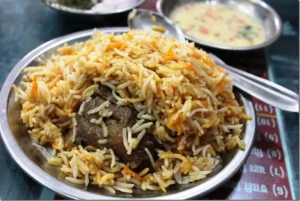
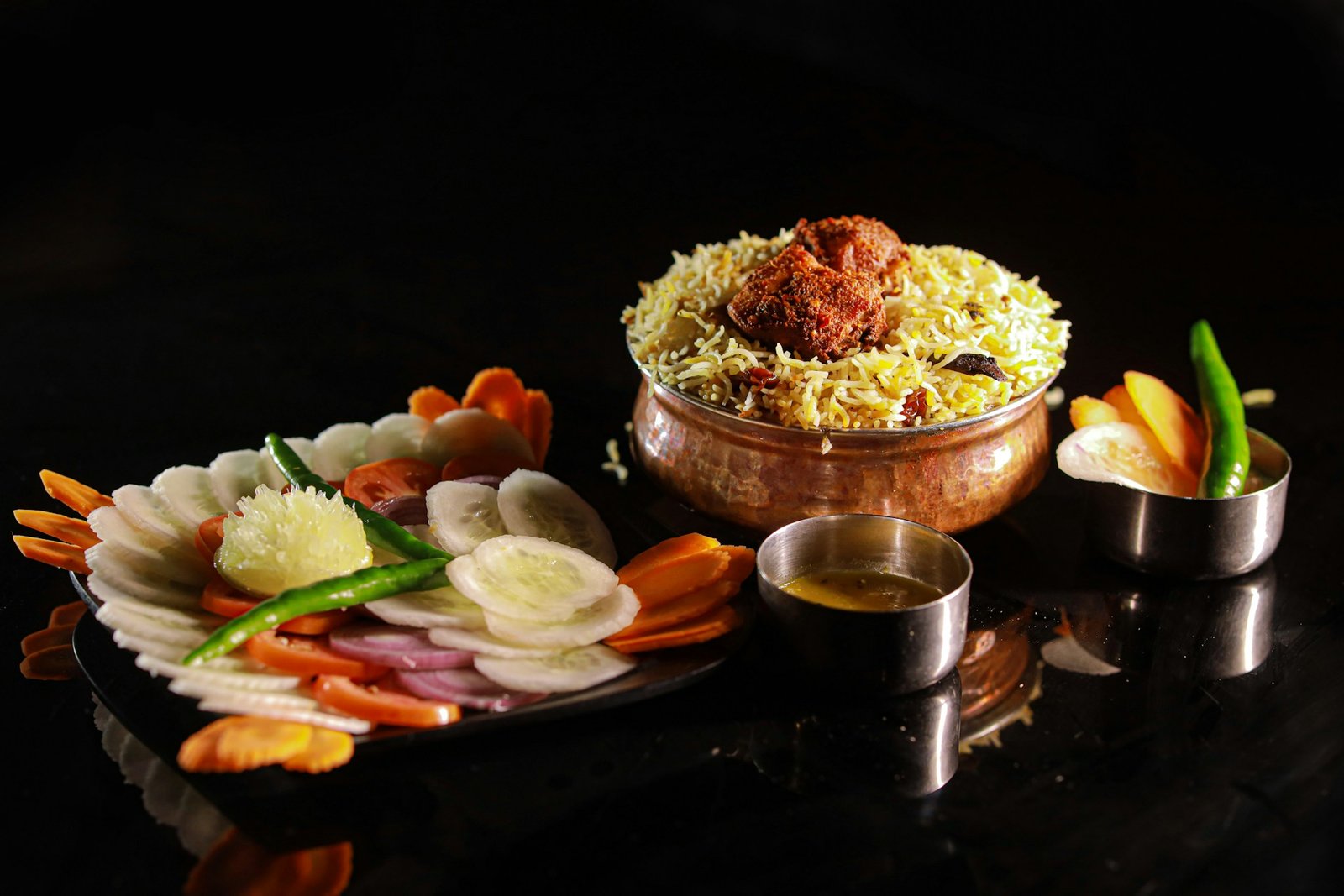
Few dishes can create an argument at the dining table quite like biryani. Ask someone from Hyderabad what makes a perfect biryani and you may hear about fragrant basmati rice, marinated meat and the slow dum cooking method. Ask someone from Kolkata and potatoes may become an essential part of the conversation. In Lucknow, the discussion could shift towards delicate spices, subtle flavours and the elegance of Awadhi cooking.
Yet behind all these regional variations lies a much bigger story. History of Biryani: Origin, Evolution and the Story Behind India’s Iconic Dish
Table of Contents
The history of biryani is not simply about when someone first combined rice, meat and spices. It is a story shaped by migration, royal kitchens, trade routes, local ingredients and centuries of culinary experimentation.History of Biryani: Origin, Evolution and the Story Behind India’s Iconic Dish
Today, biryani is deeply associated with Indian cuisine, but its journey appears to connect Persian culinary traditions with the cooking cultures of the Indian subcontinent. Over time, what may have begun as a rice-and-meat preparation developed into dozens of distinctive regional dishes.
So, where did biryani actually come from? Let us explore the fascinating history of biryani, its possible origins and how it became one of the most celebrated dishes in South Asia.
What Is Biryani?
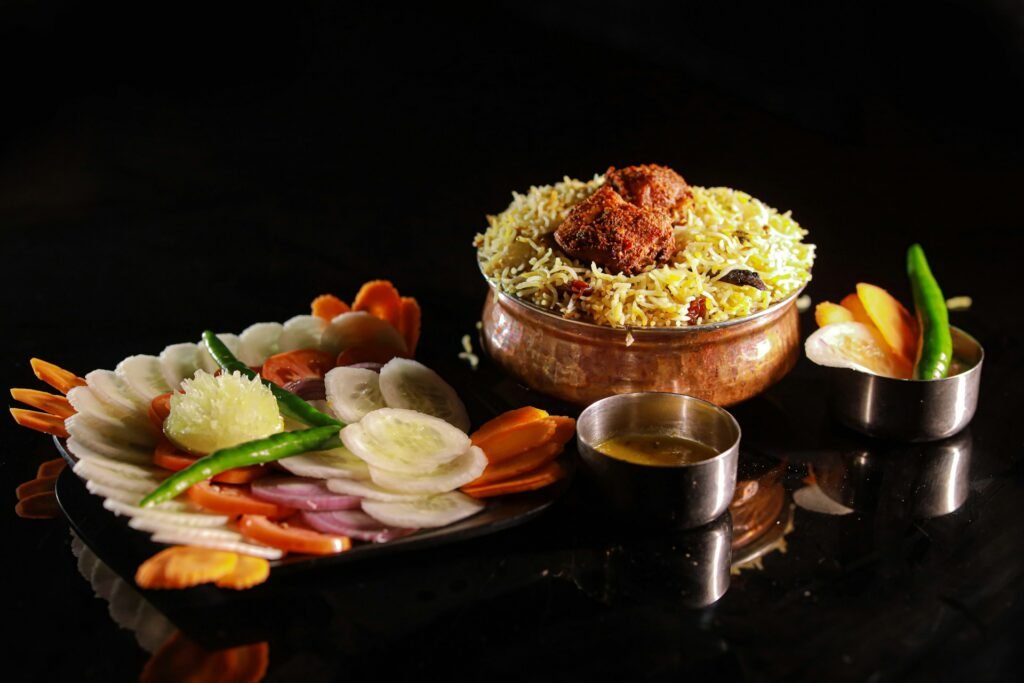
Biryani is a layered or combined rice dish typically prepared with long-grain rice, meat or vegetables, spices and aromatic ingredients. Depending on the region and recipe, it may contain chicken, mutton, goat, fish, eggs or vegetables.History of Biryani: Origin, Evolution and the Story Behind India’s Iconic Dish
Ingredients such as saffron, cardamom, cinnamon, cloves, bay leaves, fried onions, mint and coriander are commonly associated with different styles of biryani.
However, there is no single recipe that defines every biryani.
Some versions are intensely spiced, while others are intentionally delicate. Some use raw marinated meat that cooks together with partially cooked rice. Others cook the meat and rice separately before layering them.
This diversity is one of the reasons the history of biryani in India is so interesting. Rather than remaining one fixed dish, biryani adapted wherever it travelled.
Where Did Biryani Originate?
The exact origin of biryani is difficult to identify with complete certainty. Food traditions often develop gradually, and dishes can change significantly as they move between regions and generations.
One widely discussed connection is with Persian cuisine.
The word “biryani” is often linked to Persian linguistic roots, with terms associated with rice and cooking or frying. Persian and Central Asian culinary traditions included elaborate rice dishes, many of which combined rice with meat, dried fruits, nuts and aromatic spices.
As Persian cultural influence reached the Indian subcontinent through rulers, traders, migrants and courtly traditions, these cooking techniques interacted with local Indian ingredients and culinary practices.
This interaction likely played an important role in the development of the biryani we recognise today.
Was Biryani Invented in Persia or India?
It is tempting to look for one country, chef or royal kitchen and declare it the birthplace of biryani. The actual story is more complicated.
Persian-style rice preparations existed before many of the famous Indian biryani traditions developed. At the same time, the biryanis now associated with Hyderabad, Lucknow, Kolkata and other Indian regions evolved substantially within the Indian subcontinent.
It is therefore more useful to think of the history of biryani as an evolution rather than a single moment of invention.
Persian culinary influence may have provided important foundations, while Indian cooks transformed those foundations using regional spices, cooking methods and ingredients.
History of Biryani in India
The history of biryani in India is closely connected with the growth of Persian-influenced court culture and Muslim dynasties in the subcontinent.
Royal kitchens became places of extraordinary culinary experimentation. Skilled cooks had access to premium rice, meats, saffron, dried fruits, spices and other expensive ingredients. Cooking was not merely about nourishment. Food could represent hospitality, wealth, refinement and political prestige.
Rice and meat preparations became increasingly sophisticated within these environments.History of Biryani: Origin, Evolution and the Story Behind India’s Iconic Dish
Biryani and the Mughal Era
The Mughal period is frequently associated with the popularisation and refinement of biryani in India.
Mughal cuisine itself developed through a combination of Central Asian, Persian and Indian influences. Court kitchens brought together cooks from different backgrounds, creating an ideal environment for culinary traditions to merge.
Rich meat preparations, aromatic rice dishes, nuts, saffron and fragrant spices became characteristic features of elite Mughal dining.
Biryani naturally fits within this broader culinary world.
However, the common claim that the Mughals simply “invented biryani” is an oversimplification. Rice and-meat dishes existed in different forms before and beyond Mughal kitchens.
Their importance lies more in how courtly food culture helped refine, spread and elevate such preparations.
The Mumtaz Mahal Biryani Story
One of the most famous stories in the history of biryani involves Mumtaz Mahal, wife of Mughal emperor Shah Jahan.
According to popular legend, Mumtaz Mahal once visited army barracks and noticed that the soldiers appeared weak or undernourished. She supposedly instructed royal cooks to prepare a nutritious meal combining rice, meat and spices.
The result, according to the story, was biryani.
It is a memorable tale, but it should be treated as culinary folklore rather than established historical fact. There is insufficient evidence to identify this event as the definitive invention of biryani.
Still, the legend demonstrates how strongly biryani has become associated with Mughal history in popular imagination.History of Biryani: Origin, Evolution and the Story Behind India’s Iconic Dish
How Biryani Spread Across India
One of the most important chapters in the history of biryani began when the dish moved beyond major royal centres.
As rulers, administrators, soldiers, cooks and merchants travelled across the subcontinent, culinary traditions travelled with them. Local cooks then adapted biryani according to regional tastes and available ingredients.
The result was not one national biryani recipe.
It was an entire family of biryanis.
Famous Regional Biryanis and Their History
Hyderabadi Biryani
Hyderabadi biryani is perhaps one of India’s most internationally recognised biryanis.
Its development is associated with the culinary traditions of Hyderabad, particularly the kitchens of the Nizams. The cuisine of the region blended Persian and Mughal influences with flavours and ingredients from the Deccan.
One famous preparation is kacchi biryani. Raw marinated meat is layered with partially cooked rice and then cooked together using the dum method.
This technique requires considerable precision because both the rice and meat must reach the correct level of doneness without either being overcooked.
Hyderabadi biryani is typically known for its rich aroma, spices, fried onions, herbs and meat.History of Biryani: Origin, Evolution and the Story Behind India’s Iconic Dish
Lucknowi or Awadhi Biryani
Lucknow developed another celebrated style of biryani through the sophisticated court culture of Awadh.
Unlike some intensely spiced biryanis, Lucknowi biryani is admired for balance and subtlety. Aroma plays an important role, and the rice and meat are often prepared separately before being layered and finished together.
This method is commonly associated with pakki biryani, where the meat is cooked before the final layering process.
Awadhi cuisine valued refinement, and its biryani reflects that philosophy. The flavour is complex without allowing a single spice to dominate the entire dish.
Kolkata Biryani
The history of Kolkata biryani is commonly connected with Nawab Wajid Ali Shah, the last king of Awadh.
After the British annexation of Awadh, Wajid Ali Shah was exiled to the Kolkata area in the nineteenth century. His court culture, including its food traditions, travelled with him.
Over time, a distinctive Kolkata-style biryani developed.
Its most famous feature is the potato.
There are several stories explaining why potatoes became prominent, including claims related to economics and the growing popularity of potatoes during that period. Whatever the precise reason, the potato eventually became a defining part of Kolkata biryani.
The result is a relatively delicate, aromatic biryani that carries traces of Awadhi culinary heritage while possessing a strong identity of its own.History of Biryani: Origin, Evolution and the Story Behind India’s Iconic Dish
Malabar and Thalassery Biryani
The biryani traditions of Kerala’s Malabar Coast demonstrate how trade shaped Indian food history.
For centuries, the Malabar region maintained commercial connections with Arab traders and other communities across the Indian Ocean. These exchanges influenced local culture and cuisine.
Thalassery biryani differs noticeably from many North Indian styles. It is traditionally associated with a shorter-grain fragrant rice rather than the long basmati grains commonly imagined when discussing biryani.
Its flavour profile and preparation reflect the unique culinary history of Kerala.
Sindhi Biryani
Sindhi biryani is known for its bold and tangy flavour profile. Recipes often include generous spices, herbs, chillies and ingredients that create a noticeable balance between heat and acidity.
It represents another example of how rice-and-meat cooking traditions developed distinct identities across South Asia.
Kacchi vs Pakki Biryani
Understanding the cooking methods is essential when exploring the history of biryani.
Kacchi Biryani
In kacchi biryani, raw marinated meat is layered with partially cooked rice. The ingredients are then sealed and cooked together.
As the meat cooks, its juices and spices flavour the rice above it.
This technique requires careful control of heat, moisture and cooking time.
Pakki Biryani
In pakki biryani, the meat or curry is cooked separately before being layered with partially cooked rice.
The layered preparation is then finished together, often using dum cooking.
Both methods can produce excellent biryani, but they create different textures and flavour distributions.
The Importance of Dum Cooking
The word dum refers to a slow-cooking technique in which food is cooked in a tightly sealed vessel.
Traditionally, the lid of a heavy cooking pot could be sealed with dough to trap steam inside. The biryani would then cook slowly, allowing aromas and flavours to circulate through the layers.
This method helps the rice absorb the fragrance of the meat, spices and herbs while retaining moisture.
Dum cooking became particularly important in several famous biryani traditions and remains strongly associated with dishes such as Hyderabadi and Awadhi biryani.History of Biryani: Origin, Evolution and the Story Behind India’s Iconic Dish
Biryani vs Pulao: What Is the Difference?
The difference between biryani and pulao is frequently debated.
In general, pulao is often prepared using a more integrated cooking process in which rice cooks with the other ingredients. Biryani frequently involves more elaborate seasoning, layering or separate preparation of rice and meat.
However, historical food categories are rarely perfectly neat.
Regional cooking traditions may use the words differently, and there can be significant overlap between pulao and biryani techniques.
Rather than treating them as completely unrelated dishes, it is useful to see them as members of a much larger family of seasoned rice preparations.
How Biryani Became a Part of Indian Food Culture
Perhaps the most remarkable part of the history of biryani is what happened after it moved beyond royal kitchens.
Biryani became food for almost every kind of occasion.
It is served at weddings and family celebrations. It appears at festivals and community gatherings. It is sold by street-side vendors and speciality restaurants. It can be an elaborate Sunday meal or a quick delivery order after a long day.
The dish also crosses many social and regional boundaries.
Every city seems convinced that its biryani deserves special recognition. That sense of ownership is important because it shows how thoroughly biryani has been absorbed into local identities.
It may carry traces of Persian court culture and centuries-old migration, but modern biryani belongs equally to the communities that continued to cook, adapt and reinvent it.
Biryani in the Modern World
Today, biryani has travelled far beyond South Asia.
Indian, Pakistani and Bangladeshi communities have helped introduce different biryani traditions to cities around the world. Restaurants serve everything from traditional dum biryani to modern vegetarian and fusion interpretations.
The dish has also adapted to contemporary lifestyles.
Chicken biryani, mutton biryani, egg biryani, vegetable biryani, paneer biryani and seafood versions are widely available. Cooking techniques have also evolved to include pressure cookers, electric rice cookers and other modern equipment.
Yet the basic attraction remains surprisingly consistent: aromatic rice, layered flavours and the anticipation of opening a pot filled with fragrance.
FAQs About the History of Biryani
1. What is the history of biryani?
The history of biryani is connected with Persian and Central Asian rice traditions that interacted with Indian culinary practices over several centuries. Royal courts, migration, trade and regional cooking cultures contributed to the development of the many biryanis eaten today
2. Which country invented biryani?
There is no universally established single birthplace of modern biryani. Persian culinary traditions strongly influenced its development, while many of today’s most famous biryani styles evolved within the Indian subcontinent.
3. Did the Mughals invent biryani?
The Mughal era played an important role in the development and popularisation of elaborate rice and meat dishes, but saying that the Mughals alone invented biryani would oversimplify its history.
4. Who introduced biryani to India?
Biryani does not appear to have been introduced by one clearly identifiable individual. Its development reflects centuries of Persian, Central Asian and Indian cultural and culinary exchange
5. Which is the oldest biryani in India?
It is difficult to identify one Indian biryani as definitively the oldest because recipes and cooking traditions evolved gradually. Hyderabadi, Awadhi and several southern traditions all have deep historical roots.
6. Why is Kolkata biryani served with potato?
Kolkata biryani developed from Awadhi culinary traditions and became famous for including potatoes. Several explanations exist for their introduction, but the potato eventually became one of the defining features of the Kolkata style.
8. What does dum biryani mean?
Dum biryani is cooked slowly in a tightly sealed vessel. The trapped steam helps the rice, meat, spices and aromatics cook together while retaining their fragrance and moisture. History of Biryani: Origin, Evolution and the Story Behind India’s Icon
Conclusion
The history of biryani cannot be reduced to one emperor, one royal kitchen or one country. Its story is much richer than that.
Persian and Central Asian culinary traditions helped shape its foundations. Indian royal courts refined and transformed rice-and-meat preparations. Regional cooks then adapted them according to local ingredients, tastes and techniques.
That continuous evolution gave us Hyderabadi biryani, Lucknowi biryani, Kolkata biryani, Thalassery biryani, Sindhi biryani and numerous other variations.
Each tells a slightly different story.
That may be the real secret behind biryani’s longevity. It has never belonged to just one recipe. For centuries, people have borrowed it, changed it and made it their own.
The history of biryani is therefore more than the history of a dish. It is a story of cultural exchange, migration, regional identity and the ability of food to travel across generations while still finding a place at the modern dining table.History of Biryani:History of Biryani: Origin, Evolution and the Story Behind India’s Iconic Dish
Contact US – https://dadabiryani.shop/about-us/
vbvb